

Are you an emotional eater?
May is Mental Health Awareness Month!
Conquer Emotional Eating!
Let’s be real: to some extent, everyone is an emotional eater. The truth is, not all emotional eating is unhealthy. It is natural and normal to occasionally enjoy food to celebrate and form lasting memories with friends and family. However, many of us have an unhealthy relationship with food due to our emotional eating. Ask yourself the following questions:
Do feelings of anger, sadness, or stress drive you to eat? Do you turn to food for comfort or eat out of boredom? Are you often in a state of dieting or restricting? Do you frequently eat to the point of feeling uncomfortable or stuffed? Do you feel the need to eat in secret? Are you gaining weight and can’t pinpoint exactly why?
Most people think of emotional eating as a lack of self-control. However, in my experience as a registered dietitian, this is rarely the case. Emotional eating is multi-layered, complicated, and unique for each person. However, I typically see the following 5 things contribute to emotional eating:
- Unawareness. Emotional eating is often a direct result of simply not paying attention to what or why we eat. Therapists call this “unconscious eating.” For example, when you are satisfied and finish a meal, and yet you continue to pick at it, slowly eating the remaining portion you originally intended to leave behind. Unconscious eating also occurs with the peanuts, crackers, or M&M’s on the counter that you continue to munch on just because they are in front of you. The solution is simple: make a valiant and conscious effort to be mindful of what and when you eat. To start, simply spend a couple days writing down everything you eat- this may surprise you and help you identify trends in your eating patterns.
- Food is your main source of joy. I often ask people what life would be like if they did not overeat or binge. A common answer is, “I would have nothing to look forward to.” Truly, at the end of a hectic day, a bowl of Bluebell Ice Cream can be especially effective at soothing to our exhausted and hard-working selves. Why? Research suggests that sugar is much like a drug to us, by stimulating the release of opioids in our brains. (Opioids are the active ingredients in cocaine, heroin, and other narcotics). For this reason, kicking the habit of emotional eating can be much like kicking a drug habit. The solution? Find other, more constructive, means of self-soothing besides food. However, in order to give up emotional eating entirely, you must also practice dealing with difficult feelings, which brings me to #3.
- Inability to Tolerate Difficult Feelings. We learn from a young age to avoid or procrastinate doing things that are unpleasant. Unfortunately, many of our choice distractions are not always in our best interest. In our culture, eating is an acceptable alternative to dealing with uncomfortable thoughts and emotions. How do we overcome this avoidance? It’s easier said than done, but we need to practice allowing ourselves to experience honest, authentic emotions. If you feel the need for support, seek the help of a therapist, honest loved ones, or a dietitian to deal with these emotions in a constructive way. Remember when dealing with constructive help from a reliable source that, “the criticisms of a friend are better than the kisses of your enemy.”
- Body Hate. It might seem counterintuitive, but it’s true: body hate and shame are the biggest causes of emotional eating. When it comes to our bodies and sense of self, negativity, shame, and hatred rarely inspire people to make long-lasting positive changes. In order to break the emotional eating cycle, we must learn a level of respect for our body. How? Unfortunately, this is a multi-faceted and complex problem- in order to make permanent progress in this area, we often require professional guidance.
- Deprivation. If you are an emotional eater, restrictive dieting, extreme hunger, or sleep deprivation make you vulnerable to overeating and bingeing. When your body is deprived of sleep or food, we experience an increased appetite, and more powerful cravings. What’s the solution? Get plenty of sleep and eat several small meals and snacks during the day, about every 2-3 hours. I know you’re thinking you don’t have the time, but if your goal is to stop emotional eating, you must make those 2 things a priority! No way around it.
Emotional eating is a powerful and effective way to find temporary relief from many of life’s challenges. However, emotional eating claims many victims, fueling low self-esteem, and stirring feelings of anxiety and depression. To overcome emotional eating, we must reach deep inside ourselves and find a place of grit, strength, and patience. However, doing this alone can be a tall order. If you feel overwhelmed by the journey ahead, seek the help and comfort of health professionals (doctors, therapists, and dietitians) and your loved ones. I sincerely hope that the reminders above will help you find peace with food!
Blackened Shrimp Fish Tacos with Mango Salsa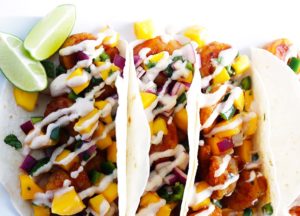

1 tablespoon chili powder
1 teaspoon cumin
1 teaspoon onion powder
1 teaspoon garlic powder ½ teaspoon black pepper
¼ teaspoon cayenne pepper
½ teaspoon salt
2 tablespoons lime juice
1 tablespoon canola oil
2 pounds large shrimp, peeled and deveined
3 ripe mangos, peeled and chopped
1 jalapeno pepper, seeds removed and diced
½ cup red bell pepper, diced
½ cup red onion, diced
½ cup fresh cilantro, chopped
1 lime, juiced
Pinch of salt
¼ teaspoon black pepper
8 corn tortillas
1 avocado, sliced thinly
Combine chili powder, cumin, onion powder, garlic powder, black pepper, cayenne pepper, salt, lime juice, and canola oil in a large bowl. Add shrimp, tossing to coat completely. Let stand 20 minutes for the shrimp to absorb the flavor.
Meanwhile, in a medium-sized bowl, toss together mangos, jalapeno and red bell peppers, onion, cilantro, lime juice, salt and pepper. Set aside.
Heat a large non-stick skillet over medium-high heat. Once hot, add shrimp to pan. Stirring occasionally, sauté shrimp for 3-5 minutes, or until pink. Portion shrimp into 8 tortillas and garnish with mango salsa, a slice of avocado, and a lime wedge.