
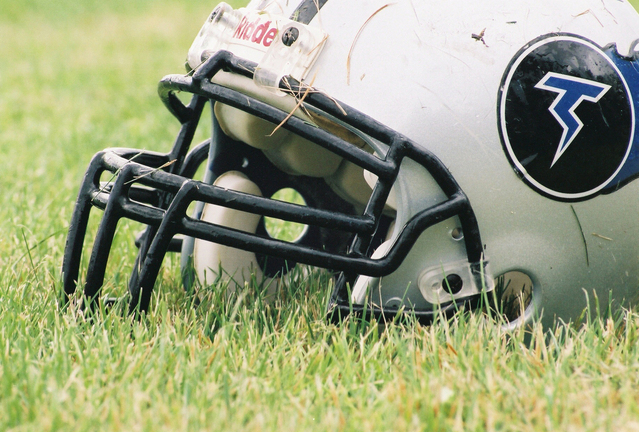
 As parents, a lot of us are asking the question, should we allow our sons to play football.
Tragically, this year, 7 young men have died playing football in the United States. There are approximately 45,000 concussions sustained by high school football players a year. About 4-7 football players sustain neck injuries resulting in paralysis each year. Although not as catastrophic there are many knee, ankle, elbow, hip, and other traumatic injuries incurred.
How does that compare to other sports? There are approximately 115 teenage bicycling deaths each year. There have been 174 pediatric pool related drowning deaths this past summer. All Terrain Vehicles are responsible for roughly 100 teenager deaths a year. Winter outdoor sports including skiing are responsible for 20 deaths a year.
What about head injuries, specifically concussions? Girls soccer has the same rate as football. Boys soccer, lacrosse, hockey, basketball, baseball and even cheering have high concussion rates.
There are many benefits to be gained with our children’s involvement in individual and team sports. There are the obvious ones of fitness and activity. There are less obvious benefits that include being part of a team dynamic, learning to lead and to follow. Being part of something greater than just self. Participation in team sports has been shown to be a positive predictor of success as an adult.
In regards to fatalities, bicycling is a higher risk sport than football. But the fatality rate for teenage bicyclists has been cut dramatically with one simple change. Helmets. In 1975, 638 children died in bike accidents, in 2011 that number was reduced to 81. We are making skiing safer with helmets, better boots and bindings, and we have been teaching children water safety and fencing pools to positively impact child pool safety.
Perhaps the question is not: football or no football? Perhaps the question is: how to make football safer? Successful programs have illuminated ways to make football a safer game. Proper tackling techniques such as, “Heads Up”, reduces helmet to helmet contact by 43%. In fact, when youth leagues implemented the Heads Up program not only were head and neck injuries drastically reduced, but all injuries requiring player restrictions were reduced. Helmet design has advanced dramatically over the past few years, further protecting the head, and integrating early warning systems to identify head injuries. Proper conditioning of the athletes with an emphasis on neck strength has been shown to reduce some football injuries. Reducing the total number of hits per season by limiting the frequency of full contact practices is becoming more accepted. In the 16 week NFL season, teams are only allowed 13 full contact practices. The importance of concussion awareness, concussion baseline testing, and concussion education directed at the players, coaches, trainers, and parents cannot be overlooked.
Risk is a part of all our lives. There was a time when no one wore seat belts. There was a time when surgeons didn’t was their hands. Let’s take advantage of advances in technology and experience to make worthwhile endeavors safer – including high school football.
This article downplays the risk of football by using bad statistics. The author notes that the absolute number of deaths in cycling is greater than in football, and concludes that “bicycling is a higher risk sport than football.” But there are obviously more cyclists that football players, and I imagine cyclists are on their bike for more time per year that football players are on the field.
I appreciate the comment, Graham. My aim was to illustrate that biking fatalities dropped precipitously when when we learned how to make it safer, and to extend that concept to other sports including football. The numbers came from the CDC and other government sources. The absolute number of biking fatalities is actually much higher than I stated, and that is because more people are using their bikes for regular transportation. I did not include those riders in my comparison, but tried to keep it in the realm of recreational use in children only. There are a little over 2 million high school football players in the United States, I do not know the denominator for teenage bicyclists, so I could not extrapolate to a finite risk per thousand and had to use the raw fatality statistics.
Great article. I was at the HTT meeting this week and found great interest in your organizations background and vision. I also am active in coaching at the YMCA and thought about mentioning your baseline scanning but I didn’t want to do that without vetting it with you.
If you could send me an email. I’d like to discuss via phone or in person whether you would want that as well as hear a little more about your organizations story.
Thanks,
Frank
Healthcare Practice Manager
Sigma Solutions